
In this Threat Analysis Report, Cybereason explores the fake installer, ValleyRAT
February 3, 2026 / 16 minute read
.png)
In this Threat Analysis Report, Cybereason explores the fake installer, ValleyRAT
February 3, 2026 / 16 minute read
DFIR expert Jamie Mamroe shares 2026 Incident Response Predictions around Identity and Cloud attacks
January 9, 2026 / 4 minute read
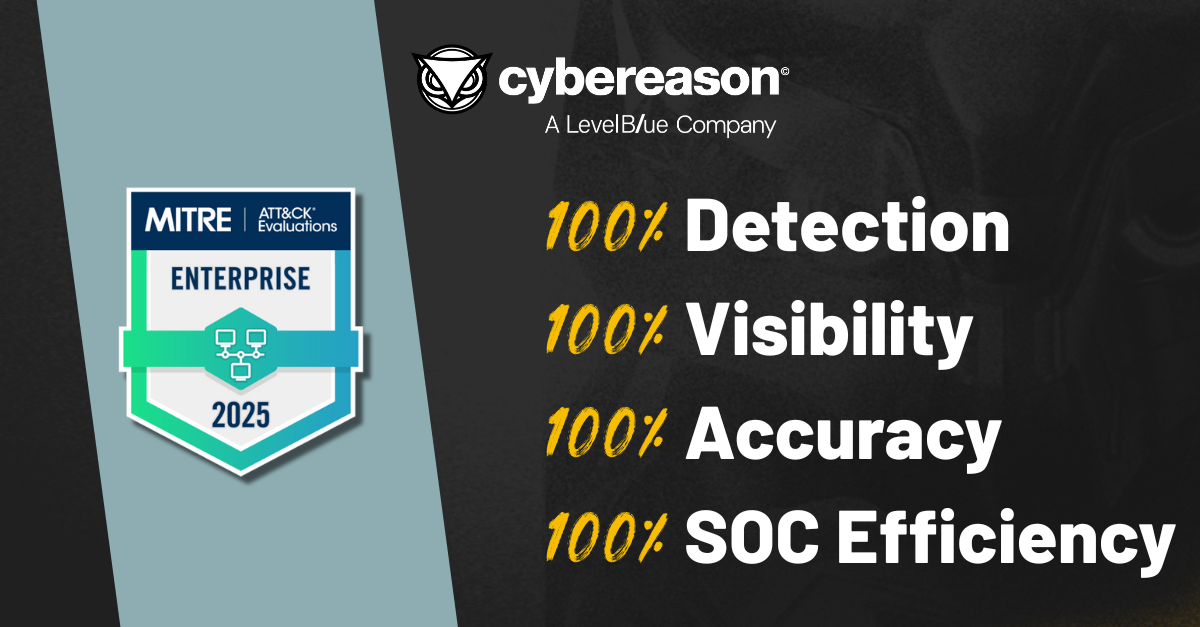
Cybereason achieves 100% detection, accuracy, and SOC efficiency in the 2025 MITRE ATT&CK Enterprise Evaluation.
December 16, 2025 / 3 minute read
.png)
React2Shell vulnerability, tracked as CVE-2025-55182, recently discovered in React’s Server Components, could allow for pre-authentication remote code execution.
December 5, 2025 / 3 minute read
In this Threat Analysis Report, Cybereason explores the new ransomware group, "The Gentlemen", and their latest TTPs.
November 18, 2025 / 8 minute read
.png)
In this Threat Alert, Cybereason analyzes Tycoon 2FA phishing kit, a sophisticated phishing-as-a-service platform designed to bypass two-factor authentication.
November 3, 2025 / 7 minute read
Over the past year, the Cybereason Nocturnus Team has observed various trends among cyber criminals and nation-state groups leveraging various global events such as COVID-19 and other topical themes and trending issues as phishing content to lure their victims into installing their malware of choice.
As the tax season is already here, Cybereason detected a new campaign targeting US taxpayers with documents that purport to contain tax-related content, ultimately delivering NetWire and Remcos - two powerful and popular RATs (remote access trojans) which can allow attackers to take control of the victims’ machines and steal sensitive information.
The campaign bears resemblance to another campaign observed in April of 2020 which also delivered the NetWire RAT. Both NetWire and Remcos are commercial RATs that are available for purchase online for rather affordable prices of as little as US$10 per month. Both offer various licensing plans and following the Malware-as-a-Service (MaaS) model, offering their customers a subscription-based model with services such as 24/7 support and software updates:
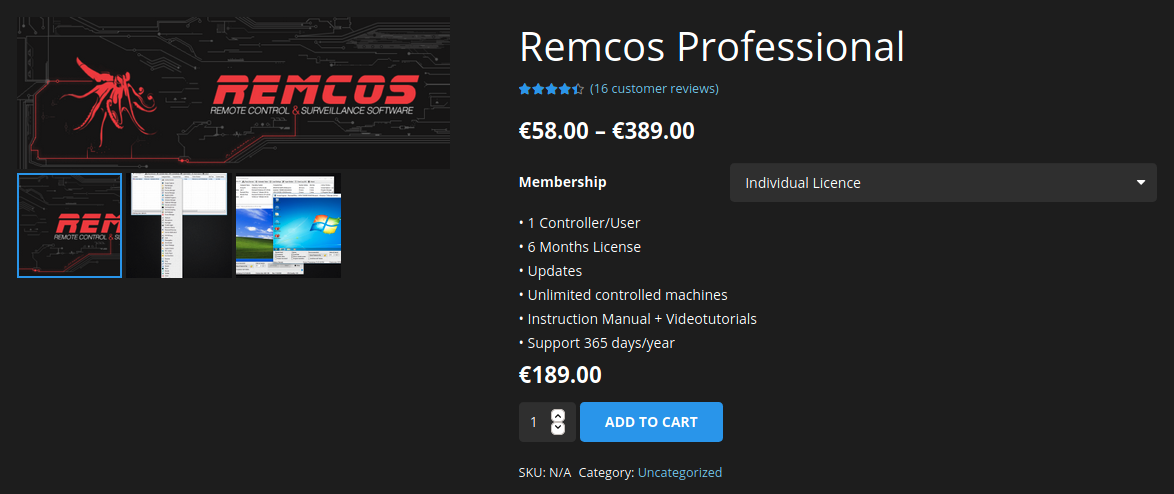
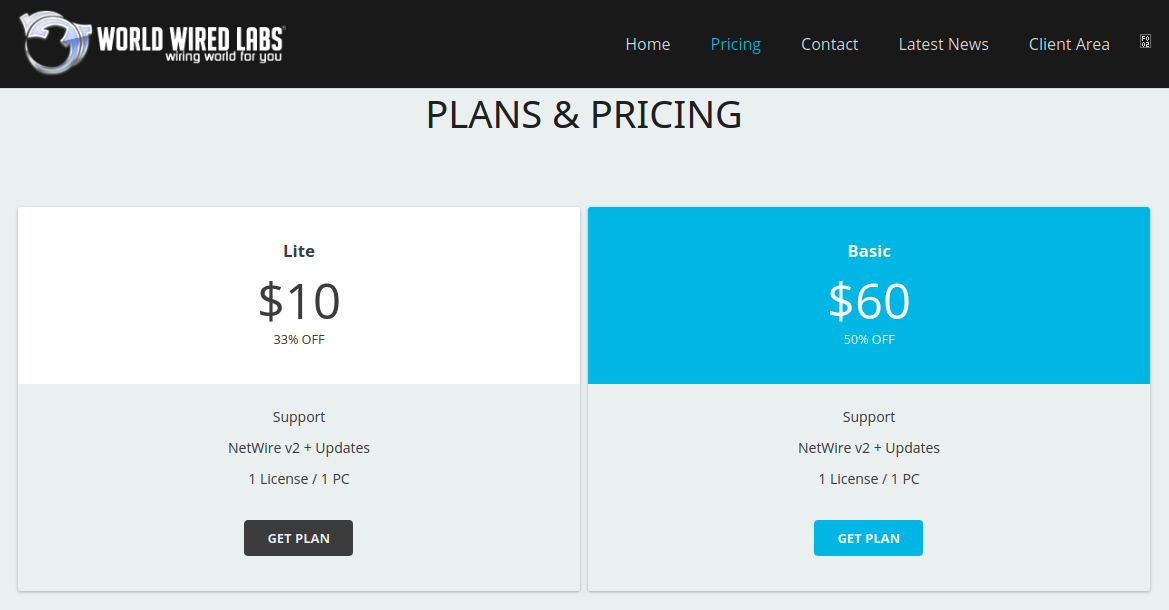 Remcos and NetWire as offered on their websites
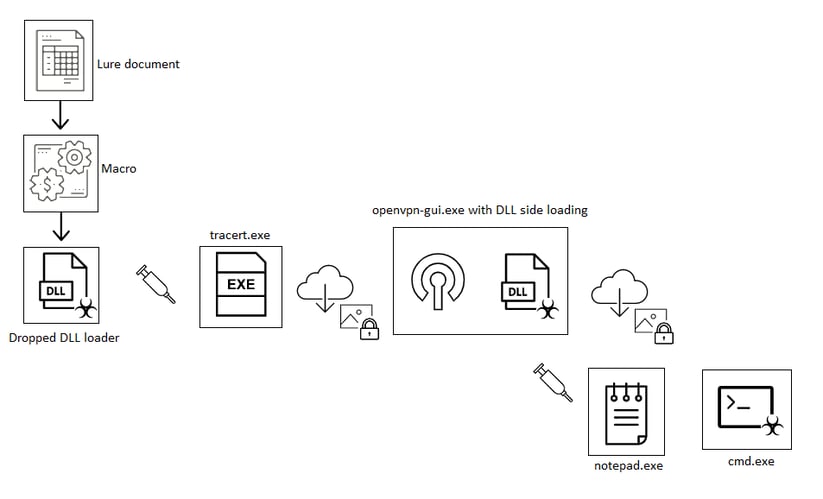
The infection vector that lures the users into installing the malware is a tax return themed Word document containing a malicious macro:
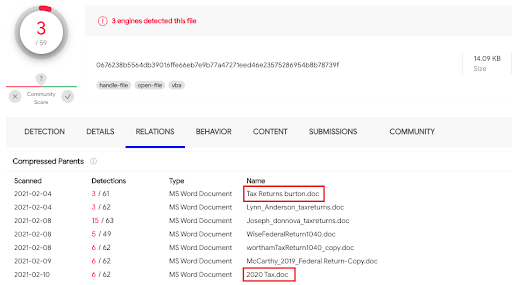 Malicious documents submitted to VirusTotal
Once the document has been opened, the content in the background is allegedly blurred, and the “Enable Editing” and “Enable Content” prompts must be manually confirmed by the user:
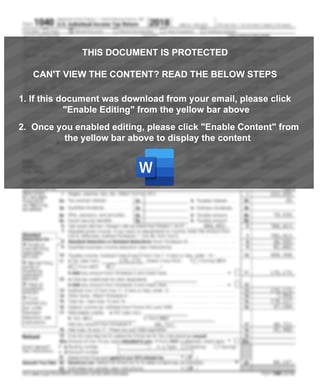
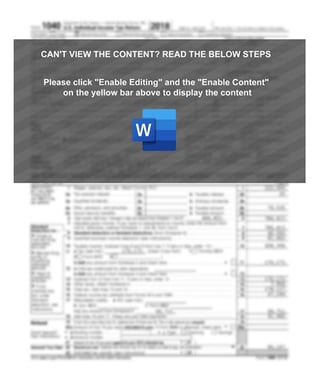
Malicious documents content
This is a known social engineering method used to encourage the user to enable embedded macros to run on their machine. Once the malicious content is being executed, an embedded and heavily obfuscated macro is ran on the victim’s machine:
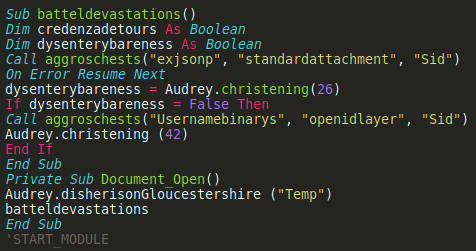 A part of the embedded macro obfuscated code
The above code partially shows that the payload is eventually dropped in the users “Temp” directory:
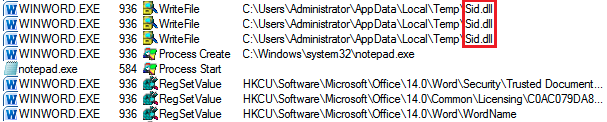 The DLL dropped by the macro code
Finally, the DLL is injected into notepad and continues the infection chain.
The “sid.dll” loader that was dropped by the macro was observed to have at least two different variants: one is a loader for Remcos, and the other is a loader for NetWire. Looking at their exports, both loaders share the same “payload” exported method:
.png?width=512&name=unnamed%20(1).png) The loader’s exported methods
The loader’s exported methods
Upon execution, the “payload” method starts decrypting data using a XOR key:
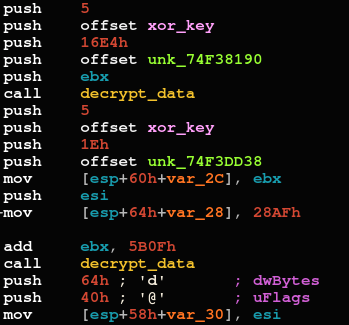 Dat decryption methods of the NetWire loader
The first decrypted part is an additional executable code, and the second part is decrypting the URL the loader connects to in order to download the next execution stage:
 The decrypted initial C2 URL
Eventually, the malicious code is injected into “tracert.exe” that downloads the OpenVPN client along with a trojanized DLL file called “libcrypto-1_1.dll”, which will be side-loaded to the OpenVPN client upon execution. A similar process, most likely by the same threat actor, was mentioned earlier this year and describes documents that date back to middle 2020. It then creates a persistence for the VPN client by creating automatic execution of a .lnk file (C:\Users\%username%\AppData\Local\Temp\openvpn-gui.lnk).
The malicious code in the sideloaded DLL unpacks an additional DLL in-memory and injects it into “notepad.exe”. A secondary payload hidden in an image file is then downloaded from “imgur.com”, a well-known cloud image storage service. The decrypted payload can be either NetWire or Remcos:
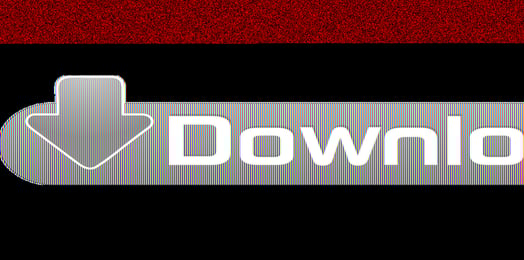 Screenshot of an image concealing a malicious payload
The features for the Remcos RAT can be found on its official website, and includes:
• Remote execution of shell commands on the infected machine
• Downloading and execution of additional payloads
• Screen capture
• Clipboard data management
The version that is used in this campaign is 3.0.0 professional, which also offers support and software updates:
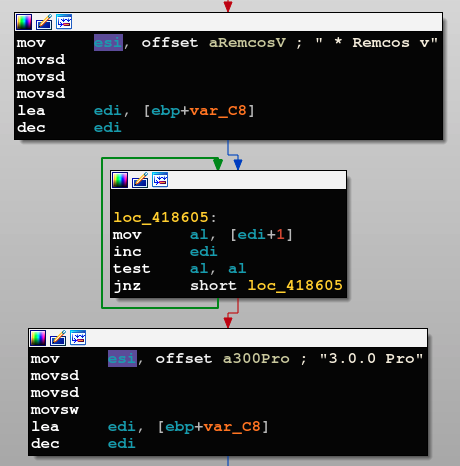 Remcos variant as seen in its code
NetWire has been active for years, and in 2019 a new version was spotted in the wild. Some of the most notable features of NetWire include:
• Downloading and execution of additional payloads
• File and system managers
• Screen capture
• Browser credentials and history theft
• Gathering information about the victim’s system
Similar to Remcos, the NetWire malware also contains indicative hardcoded strings:
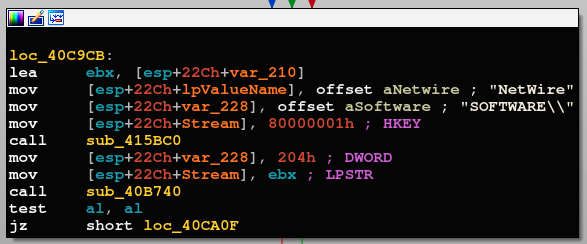
NetWire hardcoded strings
The Cybereason Defense Platform detects the execution of a malicious Word document used in the operation:
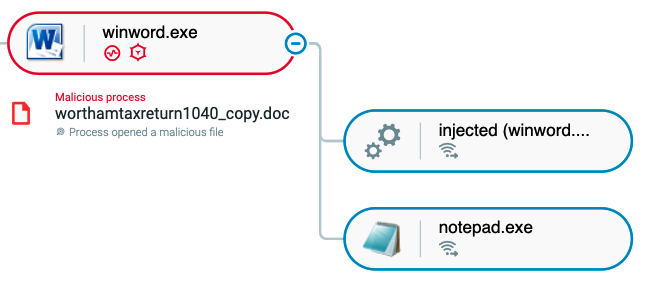
Once persistence is created in the first stage, the second stage of the attack is also detected, monitoring Remcos/NetWire injected into cmd.exe:
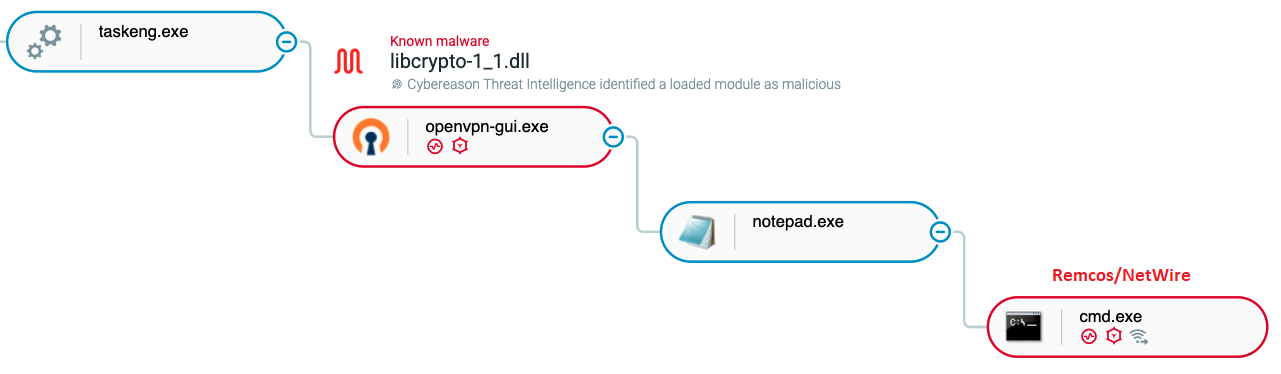
Corresponding Malops(™) are then triggered:
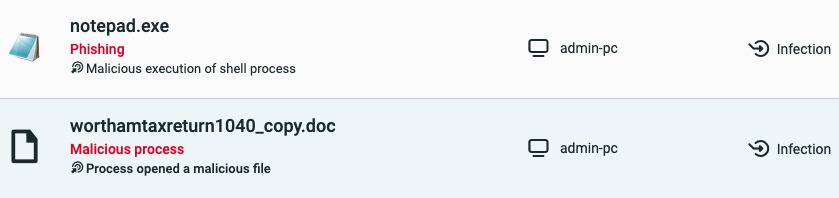
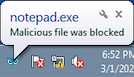
When the malicious sideloaded DLL is loaded by “openvpn-gui” in Prevention Mode, the Cybereason Defense Platform also detects the code injection into “notepad.exe” and prevents it from executing further:

Social engineering via phishing has been, and continues to be, the preferred infection method among cyber criminals and nation-state threat actors alike. In order to succeed, the threat actor must choose an interesting theme that is likely to lure its victim into opening the weaponized document or link.
In the campaign, we have demonstrated how cybercriminals are leveraging the US tax season to infect American taxpayers with the Remcos and NetWire remote access trojans, granting the malware operators full access and control over the victims’ machines. The sensitive information collected from the victims can be used by the attackers to carry out financial fraud or can be traded in the underground communities.
Cybereason also noticed efforts by the threat actor designed the campaign to stay under the radar, using various techniques such as steganography, storing payloads on legitimate cloud-based services, and exploiting DLL sideloading against a legitimate software.
|
Execution |
Persistence |
Privilege Escalation |
Defense Evasion |
Credential Access |
Discovery |
Collection |
Command & Control |
Topics: Malware, Security Career Development, Research, Company
.png)